






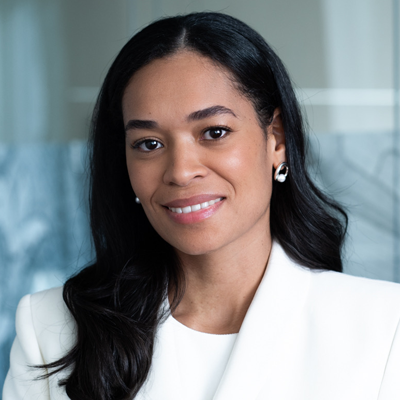
Based in New York, Ines Hoxha is a Proposal Manager at a global asset management organization who has always been drawn to innovation and problem solving. In her current role she leads complex, high-stakes institutional proposals and due diligence processes for Central banks, Official Institutions, and large global fiduciary investors. This requires coordination across various stakeholders, from investment teams and operations to senior leadership, supporting major institutional mandates and strategic long-term client relationships. Despite being such a highly regulated industry, internal innovation and process transformation initiatives are strategic priorities within her organization. When the pandemic caused global disruption, those priorities became even more imperative. Now more than ever, Ines wanted to better understand how digital transformation and innovation ecosystems could create a long-term competitive advantage.
Why MIT Sloan Executive Education?
Ines was already familiar with MIT’s reputation for innovation. During the pandemic, she participated in several MIT innovation hackathons, was selected as a mentor, and even submitted a proposal for the MIT Solve initiative, on Social Impact & Innovation and Social Entrepreneurship. While she was already actively involved in innovation and transformation initiatives within her own organization, the disruption felt across industries during this period led her to explore how she could continue to connect with others and leverage solutions for her specific roadblocks. MIT Sloan Executive Education was the natural next step.
“I felt professional experience alone could benefit from structured frameworks to complement my practice. MIT stood out because of its integration of technology, strategy and innovation. It wasn’t just theoretical. The program combined strategic frameworks with exposure to renowned MIT faculty members and experienced professionals across technology, innovation, entrepreneurship, and digital transformation. The insights shared throughout the courses gave me perspectives and tools I could immediately apply within my organization. The learning experience was deeply applied and forward-looking, which aligned closely to what I was seeking at that stage of my career.”
Change where you might least expect it
At first glance, being a part of the highly regulatory finance sector seems to be at odds with embracing change. Yet, innovation in a highly regulatory financial environment requires balancing transformation with governance, risk, and compliance considerations. However, to stay relevant in rapidly changing ecosystem innovation is a necessity. Ines admits that long term focus on innovation is one of the reasons she has continued to grow within the organization.
“Innovation is deeply embedded in our culture. I’ve remained actively involved in side projects and innovation initiatives that allowed me to continue exploring new ideas and approaches. ” This long-term focus has enabled continued experimentation in digital transformation and the integration of AI as a differentiator. “My experience at MIT definitely helped me encourage broader experimentation and collaboration around innovation initiatives. The frameworks I learned at MIT strengthened my ability to advocate for innovation and cross-functional collaboration within a highly regulated environment.”
Of course, even within highly progressive organizations, transformation initiatives can take time due to governance and regulatory requirements. In those instances, Ines recommends looking for broader ecosystem initiatives and innovation opportunities that can benefit the community at large. She helped design and deliver curriculum focused on financial literacy and entrepreneurship for women from underrepresented backgrounds for a non-profit organization in New York that focused on helping these women gain the fundamental financial knowledge and skills to help them succeed. Her involvement in this organization was another opportunity to apply lessons from her coursework and explore new approaches with greater flexibility.
Crafting a personalized journey
Ines did not initially intended to pursue an Executive Certificate. As is often the case though, once you take the first course, you quickly realize there are many other courses that can neatly complement each other and your particular professional goals.
She began her journey with Corporate Innovation because it closely related to her role at the time with a focus not just on entrepreneurship but intrapreneurship. “This course helped me understand how innovation often happens through ecosystem collaboration across internal teams, external stakeholders, and partners. It was especially relevant since I coordinate with so many different partners to complete complex projects. It really spoke to me. Learning from MIT faculty members Phil Budden and Fiona Murray was particularly impactful in understanding how innovation ecosystems can drive transformation within large organizations.”
During Accelerating Digital Transformation with Algorithmic Business Thinking, Ines strengthened her ability to apply structure and data-driven thinking to decision-making. The course also introduced her to Python and computational thinking through the teaching of MIT faculty member Aurelie Jean and Senior Advisor at NASA Paul McDonagh-Smith. It’s also a course that she’s been able to reflect on years later and understand the value of how everything is tied to algorithms.
“My experience at MIT definitely helped me encourage broader experimentation and collaboration around innovation initiatives. The frameworks I learned at MIT strengthened my ability to advocate for innovation and cross-functional collaboration within a highly regulated environment."
Breakthrough Customer Experience (CX) Strategy was especially relevant to Ines’ work with the global institutional client activities she supports. “This course reinforced the importance and understanding of the holistic client journey. Even in institutional finance, experience design matters. Clarity, trust, transparency and responsiveness are essential. And it helped reshape the strategy communication, proposals and due diligence I work on—not just as stand-alone documents, but as investor relations tools within a broader client experience. The course let by MIT faculty member Renée Gosline further reinforced the importance of trust, transparency, and experience design in institutional client engagement.”
If she had to a pick a favorite course though, Digital Business Strategy tops the list. The perspectives shared by Erik Brynjolfsson and Andrew McAfee on digital transformation and evolving business models were specifically relevant to the strategic challenges facing the asset management industry. It was the most relevant to the challenges her organization faced as they readjusted to the disruption brought about the pandemic and had to start thinking about their evolution. “This course in particular helped me better understand that digital transformation isn’t just about technology. It’s about rethinking business models and your competitive positioning of products, especially in the world of asset management. The course helped sharpen my perspective on how digital transformation, data-driven decision making, and client engagement can create long-term competitive differentiation. It was particularly valuable to think about strategic transformation as it relates to a highly regulated environment such as ours.”
These four courses provided a cohesive, timely, and personalized learning journey for Ines, culminating in her Executive Certificate in Strategy and Innovation. The experience also reinforced the value of continuous executive education and cross-industry learning. “I spoke highly about the program in my organization. I’m a proud ambassador of MIT Sloan Executive Education!”
Advice for others
Through the program, Ines developed a strong network of peers across industries and geographies facing similar transformation challenges. Yes, the practical frameworks and applications are core to the experience, but she also stresses the importance of forging connections and opening oneself up to new ways of thinking. “The discussions I had with peers from different industries were incredibly valuable. It created a broader environment for innovation and problem solving, and I brought many of those perspectives into my professional approach and strategic thinking.”
What’s next?
Ines hopes to earn an Advanced Certificate for Executives and participate in additional executive education programs, including the many new courses that have been added since she last joined us. Her focus has also changed. “I was a Senior Analyst when I first enrolled in the courses and now I lead proposal management and strategic institutional engagement initiatives for the U.S. market and Central Banks & Official Institutions. I’m still focused on innovation and entrepreneurship, but now I’m increasingly interested in leadership and strategic transformation programs that align with this next stage of my career.” Spoken like someone who truly understands the importance of constantly evolving and exploring.
Learn more about Executive Certificates.