




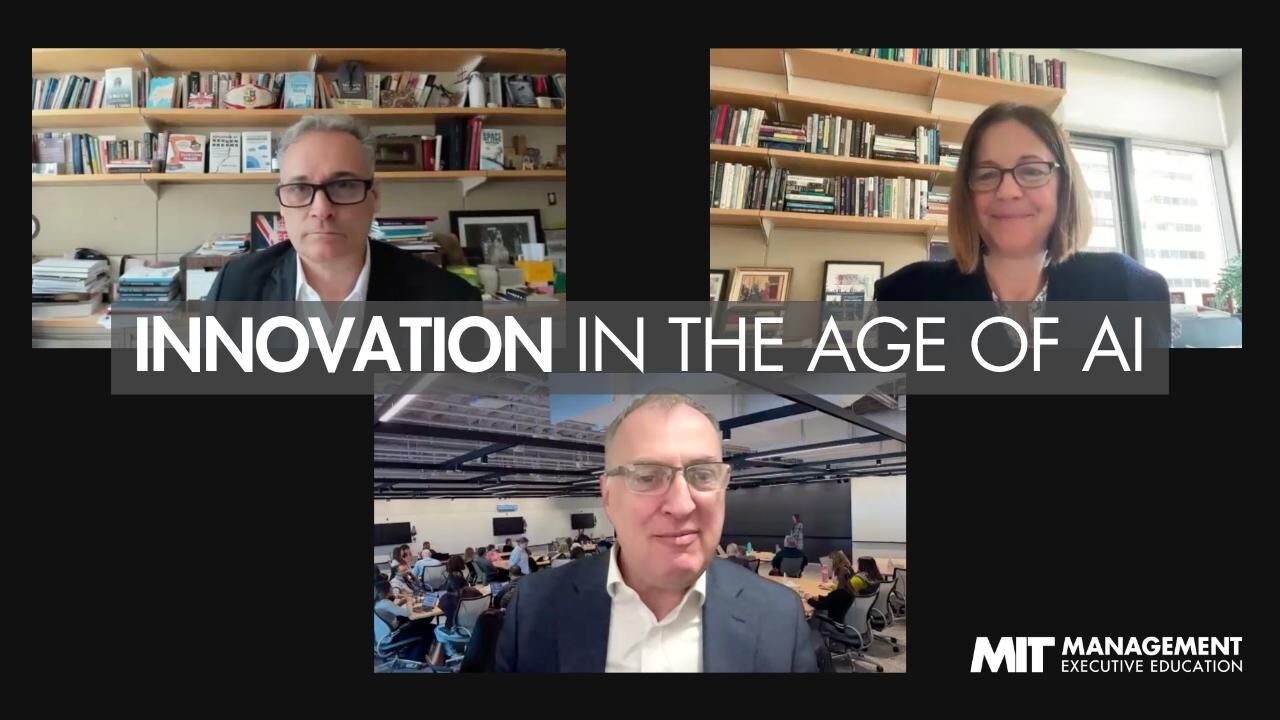




Keri Pearlson says cyber resilience will become the new mindset
“Cybersecurity will continue to be top of mind for leaders, board members, and managers, particularly as the rise of GenAI has given malicious actors a new technology to abuse. Phishing emails are even more convincing than before. New code can be generated easily that create new types of malware. And I’m sure there will be new, innovative attack vectors that we cannot even imagine today. So, what are we supposed to do? Because we know these are coming, we have to take steps now to be cyber resilient. Technology can help, but it’s not 100% effective at protecting us.
I think 2024 is the year that our mindsets change from just protecting us from cyber-attacks (which must be done and are table stakes at this point) to resilience. Companies that practice cyber resilience do several things differently. First, the mindset is different. Resilient companies expect to be attacked and set up processes and activities, so the recovery is as fast as possible. They practice how to respond and recover with tabletop exercises at all levels (including the Board of Directors) so everyone knows what to do in the event of a breach. They design their systems architecture with cyber recovery in mind. They don't just back up their systems, they find ways to back up their systems, so they are not impacted by the cyber breach. They have executives (and board members) ready to go in the event of a breach. They discuss and decide their approach to paying a ransom, should they be hit with ransomware. They don’t wait until they are held ransom to decide what to do. Most importantly, everyone in the organization is part of the cybersecurity team, from the lowest level clerk to the most senior executive. Everyone has a role to play, and they know what it is. In short, resilience will become the prevailing approach to cybersecurity. We really don’t have any other options at this point.”
Pearlson teaches in Cybersecurity Governance for the Board of Directors and Cybersecurity Leadership for Non-Technical Executives.
Steven Spear says trade long range views for agility
“Particularly in turbulent periods, having and holding to ‘long range views’ with their associated planning is not only difficult but potentially counterproductive. Better to build ability to explore the frontier of what we don’t yet know and be agile in characterizing situations, identifying and generating solutions with a request frequency and speed.
Why?is
We’re always under some pressure to have a long range view; without one how could we possibly plan? And, if in normal circumstances we might be lackadaisical in getting those views fresh—after all, we trust things’ll just keep cruising along. When things get more turbulent (and we’ve certainly experienced public health, economic, political, and military turbulence in a few-year period), there’s added pressure to break out of the status quo, invent new approaches and lock in on them.
That might be satisfying but, in fact, could be self-jeopardizing. The very turbulence to which we are responding is indication that we don’t, and actually can’t, well predict for the future, so preparing for some narrow set of future sets, well far from the horizon, can well mean committing to a high risk, low return losing bets. Better to create value by preserving our options to act, across a broader range of situations in shorter lead times than longer.
We do this in several ways. First, we must be exploring relentlessly, designating some of our time and some of our colleagues to be observing and experiencing situations that are unfamiliar, uncertain, or unknown and characterizing what they find in terms of problems, problem holders, characteristics of possible solutions, and so forth. Those are necessary first steps in consistently innovating at speed. Internally, we must be wildly self-critical of our processes for everything from upstream discovery and development through design and deployment, fueled by the questions of how we can make complex collaborative creative workflow faster and easier.
Spear teaches in Creating High Velocity Organizations and Leading Organizations for High Velocity Performance. You can also learn more in his new book Wiring the Winning Organization.
John Carrier on system performance
"The new year is poised to be a year of profound introspection for organizations, particularly in their efforts to align the 'backlog of technology investment' with actions that not only create value for customers but also alleviate stress on the organization's workforce and equipment.
Against the backdrop of inflation and heightened interest rates, corporations are expected to scrutinize their internal processes, identifying areas where system performance falls short of the sum of its parts. The emphasis will shift towards driving emergent performance through the creative contributions of employees, grounded in System Dynamics. Companies relying solely on financial investments to overcome current challenges are likely to face difficulties, given the importance of resiliency and strategic resource allocation."
Carrier teaches in Building Organizational Resilience and Implementing Industry 4.0.
Stephanie Woerner says generating value from digital requires investing in people
“In our conversations with companies this year, we saw business transformations slowing down as other priorities emerged. Becoming future ready is always a moving target, and companies must continuously evolve their capabilities to generate new value from digital. The capabilities built in a transformation enable future technology efforts, such as incorporating machine learning and generative AI. It often takes a refocusing effort to regain momentum, which involves more stakeholders, customers, and business leaders, and continuing to automate repetitive tasks and make more data accessible. Getting value from those capabilities will require investing in and developing your people and often fundamentally retraining teams to overcome as skills gap.”
Woerner teaches in Digital Strategies for Transforming Your Business.
Paul McDonagh-Smith anticipates a “potentiality paradox” with respect to generative AI
“In 2024, as transformative technologies including generative artificial intelligence (GenAI) flow further into our organizations and networks, we can expect to see what I call a ‘potentiality paradox’ come into sharper focus. To realize the potential of this technology, our organizations will increasingly rely upon human capabilities such as creativity, curiosity, critical thinking, collaboration, and consilience—the concept of unification and unity. In 2024, we will uncover and discover new technology elements to add to our toolkits; however, the ways in which we combine transformative tech with human elements such as curiosity, creativity, and compassion will determine how robust, sustainable, productive, and profitable we will become in this next phase of the digital economy.”
McDonagh-Smith teaches in Leading the AI-Driven Organization and the Generative AI Business Sprint.