




Aldo de Pape has a day job that sounds nothing like children's literature. He runs a biotechnology company built around genomic data. During MIT Sloan's Entrepreneurship Development Program (EDP) in January 2026, he stood up and pitched something that had nothing to do with genomics. He pitched an idea about the thing keeping him up at night as a father: technology addiction in children.
That pitch led to a winning team, an MIT prize, and eventually a series of illustrated books now on the shelves of major booksellers in the US and UK.
For de Pape, who is based in Aberdeen, Scotland, MIT’s EDP was a chance to learn from the school he considers the strongest in the world for technology-driven companies. "MIT, I think, is second to none in its reputation," he says. He had first heard about the program a year earlier and had been looking for a way in ever since. "It did not disappoint."

Aldo de Pape visits the MIT dome during the Entrepreneurship Development Program (EDP)
The energy in the room
De Pape enjoyed the outlook at MIT, he says, there is "less room for skepticism, and people are really goal-getters." He felt that from the start of EDP. "It's like, everything's possible, if you focus, and if you work hard enough. Doesn't matter what your last name is, or where you're from, or how much money you've got in the bank."
What surprised him was the format. He expected something academic, the kind of course where you work through a textbook chapter by chapter. Instead, he found it hands-on, built around real use cases, and refreshingly direct. Much of that, he says, came down to EDP faculty member Bill Aulet, whose teaching style he describes with obvious affection. "I don't think there are two of him in the world." Aulet's humor, de Pape adds, is "very much in your face, but in a good way.”
Failure as an honorary title
The moment that stayed with de Pape came early in the week. Aulet asked the room who had previously tried to build a company and failed. The response wasn't what he expected. "He made it sound like you had an honorary title, if that's what you'd done," de Pape recalls. For a founder from Europe, the reframing was striking. Where he lives, he says, failure tends to be met with silence. "If you failed here, it's more like, let's not talk about it too much." At MIT, the message was the opposite: be proud of it, and tell us what you learned.
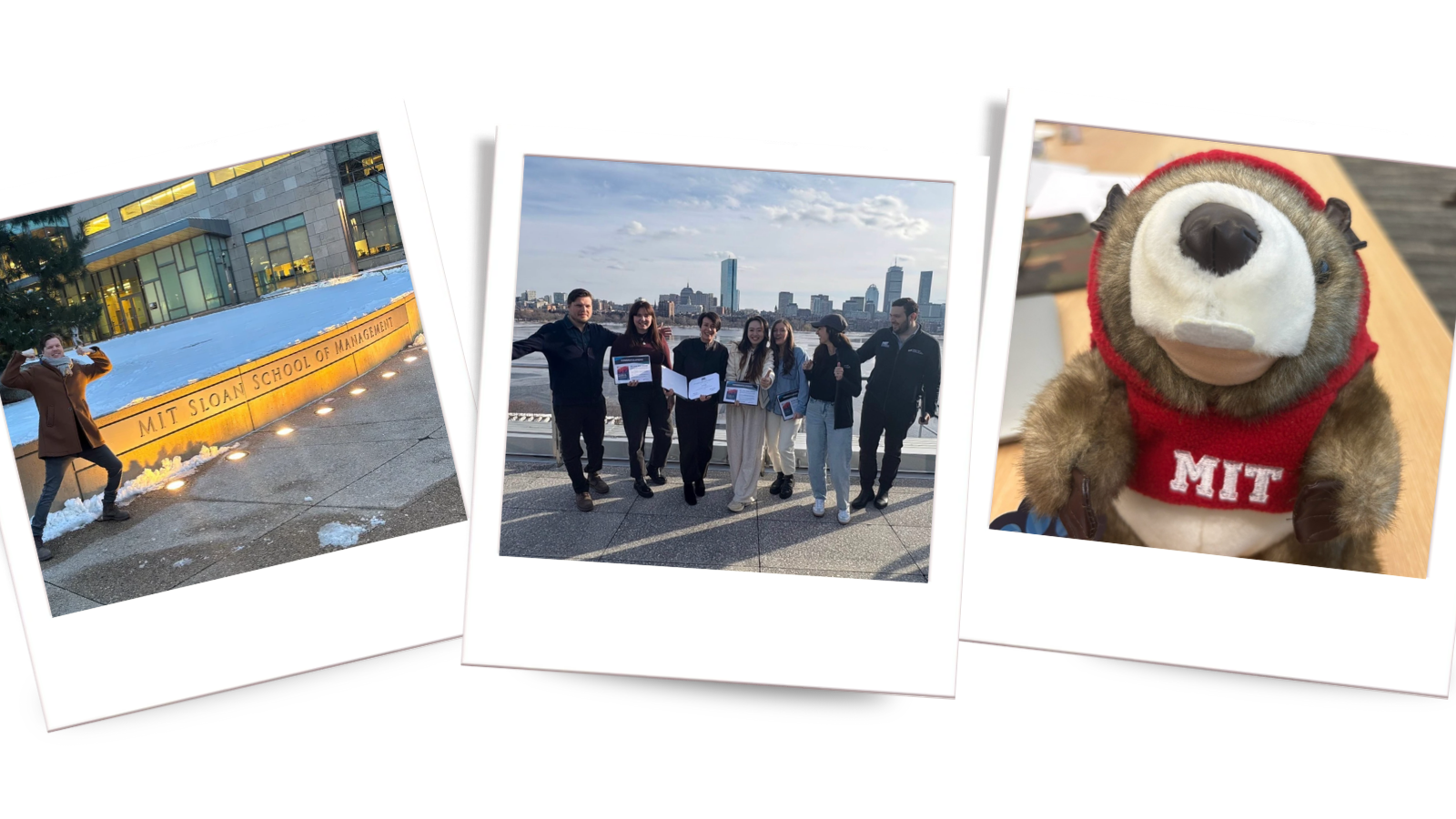
Aldo de Pape at MIT Sloan, with classmates, and his "TIM" beaver
During the AI Executive Academy, he shared those challenges with classmates from around the world. One conversation stood out: a fellow participant who works on Wall Street listened to Davis describe the modernization effort and immediately wanted to help. For Davis, that captured something unique about MIT Sloan Executive Education. The conversations don't end when class does. Executives from different industries find common purpose, and investment leaders start thinking about national security.
The underdogs who won
EDP participants can't pitch their own companies during the week, so de Pape pitched a new idea: a way to help parents manage children's relationship with technology and AI. He went first. He had memorized the pitch in his hotel room the night before and decided to "rip the band-aid off." He was joined in his group by other participants, many of them were parents concerned about the future of education.
Over the week, the team felt like underdogs. With roughly ten teams in the program, most of the other ideas pointed at fintech, energy, and other big-money sectors. "We felt like the lovey-dovey people that just do something educational," he says.
Despite having a feel-good purpose instead of a financial goal, they won. Their team took the EDP prize on the final day.
MIT Sloan Professor Bill Aulet in the Executive Education classroom
From app to book
Winning was a high point, but de Pape kept momentum going. He was still committed to building a community of parents, and to giving them the information and confidence to slow down, pause, and stay in control when it came to technology and AI. The team's original plan, though, was an app, and an app would need millions in funding. With only himself, he needed a different route.
The answer came from his past. Nearly two decades ago, he had published a book, and the process of bringing one to market was still in his muscle memory. So he asked himself: "What can I also do to build this parent community, and already generate revenue?"
The result is The Bright Star Bazaar, an independent children's book imprint publishing illustrated stories about forgotten inventions. The premise is quietly hopeful. "We've always been inventing stuff, and it always turned out okay." Parents reading the books are invited to notice that new technology has frightened people before. It is, de Pape says, "an AI optimism, if you will," but one that also says: let's pause, and not simply climb on the bandwagon of "AI will kill us all in ten years."
Why analog matters
There is an irony in this, and de Pape is the first to point it out. Using an app to get people off apps doesn’t make much sense. “That’s also why I chose the medium of books,” he says.
The timing reflects growing concern in the United States about children and screens. The US Government Department of Health links excessive screen time in children to sleep disruption and mental health challenges. For many parents, an analog alternative is a welcome one.
The books themselves are entirely human-made. De Pape wrote the manuscripts and developed the concept, while illustrator Bianca Tulea, who holds a PhD in children’s illustration, brought each story to life on the page. “If I wouldn’t have found her, these books wouldn’t have been what they are today,” he says. He signed contracts guaranteeing that no AI would ever be used in her illustrations, and he says the writing is his own. “It comes from the heart, not from AI.”
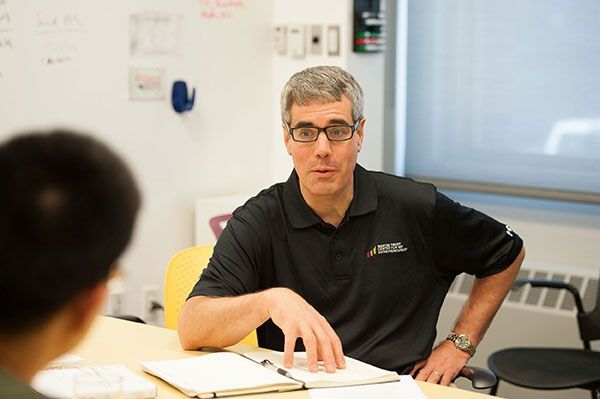
Bill Aulet is the Managing Director of the Martin Trust Center for MIT Entrepreneurship and Professor of the Practice at the MIT Sloan School of Management.
Feeling inspired to begin your EDP experience? Learn more and discover the Entrepreneurship Development Program at MIT.