




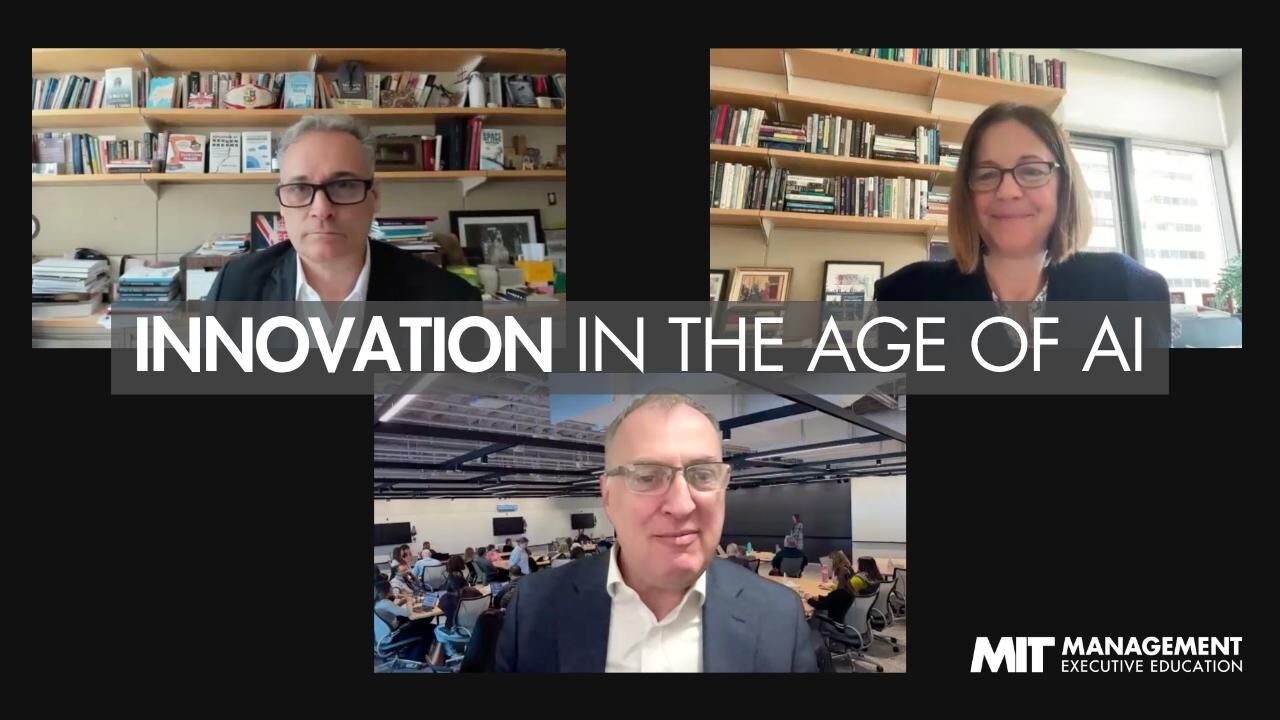




Earlier this summer, I was in the company of fellow university-based executive education providers who gathered at MIT Sloan School of Management for a two-day workshop dedicated to one question: What does it mean to be human? Storytelling was one of the several examples we’ve examined of a highly human capability and the focus of my MIT Sloan colleague Shira Springer’s session on the design of memorable learning experiences.
Stories are felt before they are analyzed
Shira began with the neuroscientist Antonio Damasio’s observation that human beings are not thinking machines that feel, but “feeling machines that think.” Good stories engage our emotions. They allow us to invest objects and ideas with meaning. That doesn’t mean that AI cannot imitate the form of a story. It obviously can, technically speaking, but the most important work happens between the lines. Someone must decide which experience matters. Someone must recognize the emotional stakes, understand whose point of view is absent, and judge what the audience is being asked to believe or do. Someone must also take responsibility for the meaning the story creates. AI surely can assist with the narrative, and it can simulate doing all of that for us. But a simulation cannot replace actually experiencing those feelings the way humans do. AI cannot (or should not!) assume the responsibility for us.
Storytelling as a leadership discipline
In her talk, Shira offered a useful framework for creating stories and experiences that matter. She called it P.R.I.M.E.: purposeful, relatable, immersive, memorable, and emotional. She also added a desire for discovery—the willingness to look at familiar experiences from a new angle.
For leaders, this is more than a communication checklist. A purposeful story begins with clarity about what people should understand or carry with them. A relatable story answers a natural question: Why should I care? An immersive story helps people enter an experience rather than merely observe it from a distance. When those conditions are present, a story is more likely to become memorable and emotional.
Discovery is equally important. The best leadership stories help people notice something they had overlooked, question an assumption, or imagine a new possibility.
This is particularly relevant when leaders are communicating strategy or organizational change. The hard task here is helping people see what those plans mean for their work. A spreadsheet can describe a destination. A story can help people see themselves arriving there.
Shira also warned about the “curse of knowledge,” which simply means that once we know something, we forget what it was like not to know it. We include more complexity than an audience can absorb, assume our point is clearer than it is, and struggle to anticipate how others will respond. Storytelling asks a leader to step outside their own expertise and imagine the audience’s starting point. That requires genuine empathy and humility.
A while ago, I wrote about the importance, for leaders, of becoming more deliberate in cultivating judgment, trust, ethical discernment, and collective sense-making. Shira’s session sharpened that argument for me. Storytelling is one of the ways leaders turn judgment into shared meaning for their organizations and customers.
Do not outsource the meaning
Shira concluded with an important observation about the timing of AI use. The material she presented suggested that people learn and remember more when they think critically about a task before bringing in AI and that AI can then help sharpen ideas and strengthen solutions.
Do not ask AI what the story is before you have decided what matters! Start with experience, observation, contradiction, or question, Shira advises. Decide why it deserves attention. Consider what it means to you and what it might mean to someone else. Then use AI to challenge the structure, test assumptions, explore alternative perspectives, or improve the language. Otherwise, we risk producing polished prose that says little of substance. AI will undoubtedly become a more fluent narrator in no time at all, which makes it even more important for human leaders to become intentional storytellers.
To learn more about the power of storytelling in leadership, watch Shira’s recent LinkedIn Live conversation with our MIT Sloan colleague Ben Shields, Senior Lecturer in Managerial Communication, and consider enrolling in her new course “Leading Through Storytelling: The Human Advantage in the Age of AI.”