




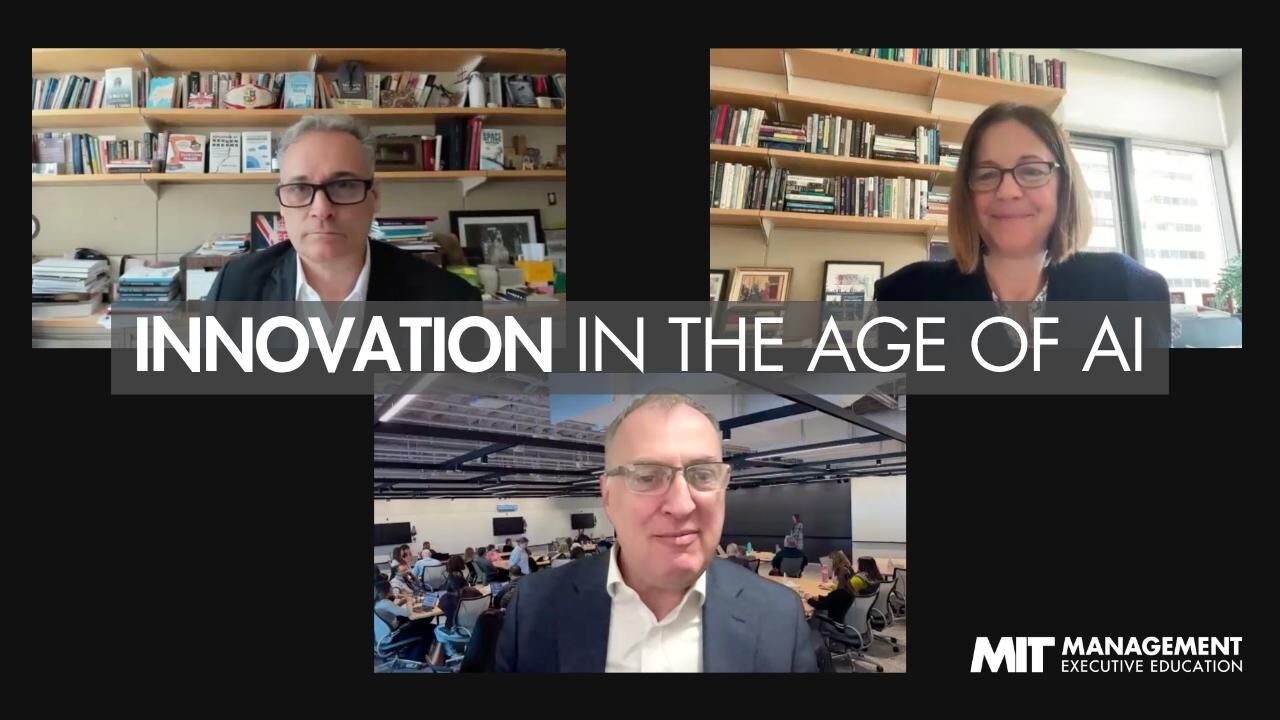




Key Takeaways from: Industrial AI That Works: Strategy, Survival, and Success
To hear the full discussion, watch the full webinar recording here.
A New Era of Industrial AI
Carrier’s explain that as AI has become accessible, many organizations rush to optimize their systems without first understanding them. However, he emphasizes that before adopting industrial AI, leaders must first understand how their current systems actually operate.
A deep understanding of an organization’s operating system is critical to successful adoption within an organization. As Carrier notes, “this technology is available to everyone. So winners will be determined not by who has access to the technology, but whose organization adopts it faster in a way that actually helps its system.”
Why Most AI Efforts Fail to Deliver Value
Many organizations struggle to realize value from AI because they adopt the technology before clearly identifying where value exists. Too often, companies invest in tools without aligning them to real operational challenges.
As Carrier explains, “before you can optimize and move to this magical world of industrial AI, we first need to understand our system.” Without this foundation, even advanced AI initiatives can fail to deliver meaningful results.
From Technology to Systems Thinking
Carrier approaches industrial AI not as a standalone technology, but as part of a broader system. Drawing on system dynamics, he emphasizes that leaders must think holistically about how information, processes, and decisions interact.
This means identifying where delays occur, where information breaks down, and where improvements will have the greatest impact. Instead of asking “where can we use AI?”, organizations should ask “Where in our system will AI create the most value?”
By shifting from a technology-first mindset to a systems thinking approach, leaders can better align AI investments with real business outcomes.
Real-World Applications of Industrial AI
Throughout the webinar, Carrier shared real-world examples of how organizations are successfully applying industrial AI.
These include the use of digital twins to significantly reduce design and build costs, as well as improve time to market and operational performance. He also highlighted how AI can streamline processes such as reducing hours of manual data collection and analysis into minutes, unlocking significant productivity gains.
In another example, Carrier demonstrated how organizations can enhance human performance by using readily available tools such as smartphones to track movement and identify inefficiencies in real time.
To hear John Carrier walk through these real-world application examples, watch the full webinar here.
The Leadership Imperative: Speed, Decisions, and Adoption
Organizations must be careful not to invest in technology simply because it is new or promising. Instead, leaders need to evaluate how AI will fundamentally improve how their organization operates.
One of the most important impacts of industrial AI is its ability to improve the speed and quality of decision-making. Faster, more informed decisions can create a meaningful competitive advantage, particularly in industries where responsiveness and efficiency are critical.
Carrier emphasized that successful organizations use AI not just to automate tasks, but to accelerate how quickly they observe, interpret, and act on information.
Culture as the Hidden Barrier
Beyond technology, Carrier highlights culture as one of the biggest barriers to successful AI adoption.
Organizations are naturally resistant to change, and in many cases, existing structures and processes can prevent new insights from being acted upon. Even with better data and tools, companies may struggle if their culture does not support learning, experimentation, and adaptation.
To fully realize the value of industrial AI, organizations must create environments where new information is welcomed, failures are treated as learning opportunities, and teams are employed to act on insights quickly.
What Leaders Should Do Next
For leaders, the path forward starts with clarity and focus.
Rather than pursuing large-scale AI transformations, Carrier encourages organizations to begin by identifying specific areas where AI can deliver measurable value. This includes examining where delays exist, where information flow is limited, and where small improvements can have a significant impact.
Leaders should also prioritize building internal understanding, both of their systems and of the technologies themselves, while fostering a culture that supports continuous improvement.
Ultimately, success with Industrial AI comes not from adopting the most advanced tools, but from applying the right solutions to the right problems in a way that strengthens the overall system.
To dive deeper into these topics, as well as develop a robust, resilient operating system with industrial AI, register for the upcoming session of Strategy, Survival, and Success in the Age of Industrial AI here.