



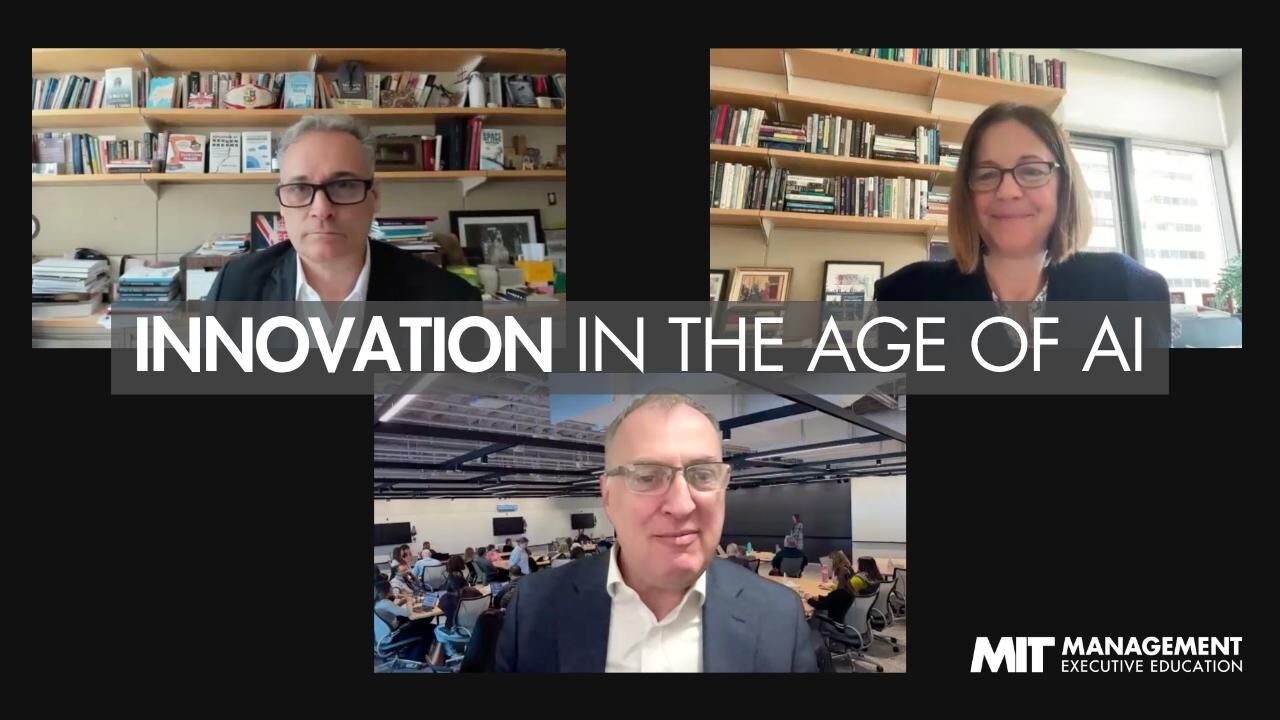



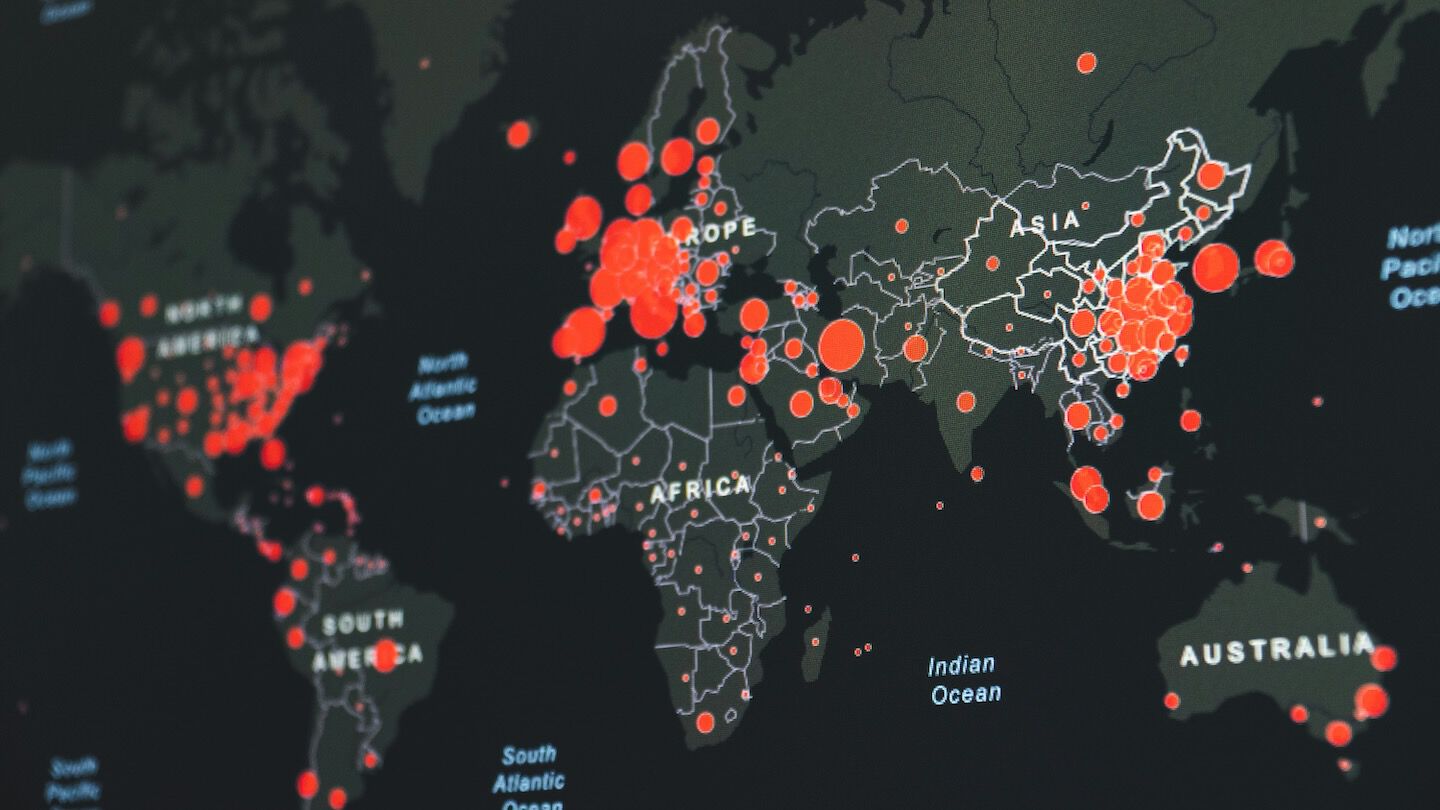
I had the pleasure of speaking with my MIT Sloan colleagues, Professor Dame Fiona Murray and Phil Budden, Senior Lecturer, about geopolitics and its business implications. What struck me most in that conversation was not simply the scale of the changes they described, but the degree to which those changes are now showing up everywhere. Not only in boardrooms, but in product decisions, talent strategy, supply chains, capital allocation, technology adoption, and long-range planning. In other words, geopolitics has moved from the margins to the middle of business leadership.
From background context to daily reality
That shift matters. For many years, organizations operated with at least an implicit faith in a relatively open, global system. Businesses still had to manage risk, of course, but there was an underlying assumption that markets would remain broadly accessible, supply chains would remain workable, and efficiency would continue to be the dominant logic. Even when geography mattered, as it always has in innovation, the broader world often felt stable enough that leaders could make decisions through a predominantly economic lens.
Fiona and Phil made clear that this lens is no longer sufficient. What leaders face now is a world where superpower competition, regional fragmentation, cyber vulnerability, industrial policy, national security concerns, and strategic competition around technology are all reshaping the environment in which businesses operate. And, importantly, they are doing so in ways that are not confined to one sector or one kind of organization.
If you are building at the scientific frontier, these forces affect where you raise capital, where you find talent, and where you locate critical capabilities. If you are adopting new technologies, they shape which platforms you trust, which systems you depend on, and how much strategic autonomy you really have. If you are trying to improve operations in more incremental ways, they still show up in the resilience of your supply chain, the availability of key inputs, and the stability of the markets you serve.
The headwinds and tailwinds leaders must see
One of the most practical ideas Fiona introduced was that geopolitics creates both headwinds and tailwinds. That distinction is important. It may be easy to think about geopolitics only as a source of disruption, and certainly there is no shortage of that: fractured markets, supply chain fragility, regulatory complexity, shifting alliances, and a level of uncertainty that can tempt leaders into a permanently reactive stance.
But Fiona’s point was that this is only half the story. These same geopolitical shifts are also creating opportunities: new investments in resilience, new demand in areas like security and critical infrastructure, and new strategic openings for organizations that are prepared to see them early.
The challenge for leaders is not just to defend against risk. It is to develop a more complete picture of the landscape.
Broadening the leadership perspective
We also talked about the need for leaders to “broaden their gaze,” to borrow a phrase from the tech innovation realm. In moments of uncertainty, there is a natural tendency to become absorbed by the immediate headline, the latest disruption, the urgent problem on the desk. But leadership in this context requires something else: the ability to step back, zoom out, and ask what larger forces are at work here. What is changing beneath the surface? What assumptions no longer hold? What decisions are we making as if the world still worked the way it did 10 or 20 years ago?
A question from the webinar audience opened a discussion about the skills leaders need now to respond well to this reality. The answers from Fiona and Phil were thoughtful, but what I found especially interesting was how quickly the conversation expanded beyond technical knowledge. Yes, there is a need for greater geopolitical literacy. Leaders need enough understanding to recognize the forces shaping their environment. But they also need something broader: the ability to synthesize across functions, to connect technology choices to market access, talent strategy to national policy, supply chains to strategic resilience.
Why diplomacy is now a business leadership skill
I don’t mean diplomacy in its formal sense as a civil service, but as the ability to navigate ambiguity, to hold difficult conversations, to understand competing perspectives without oversimplifying them, and to respond to the world as it is rather than as one might wish it to be.
That point came through powerfully when we discussed talent. One of the tensions in this moment is that organizations remain deeply dependent on global talent and diverse perspectives, even as the geopolitical environment becomes more fragmented. The answer is not to retreat from that diversity, but to lead it well—with clarity, care, and realism.
Turning geopolitics into strategy
As the conversation drew to a close, I asked Fiona and Phil what they hoped people would actually do differently as a result of this discussion. Their answers were refreshingly practical. Phil urged leaders to widen their field of vision. Fiona suggested something even simpler: Take out a piece of paper, draw two columns, and write down the geopolitical tailwinds and headwinds facing your organization.
I like that exercise because it turns an abstract subject into a strategic one. And perhaps that is the heart of it. Geopolitics can feel large, distant, and overwhelming. But for leaders, it becomes useful when it is translated into better questions, better conversations, and better decisions. Where are we exposed? Where might new opportunities be emerging? What are we assuming about markets, talent, technology, or supply that no longer holds? What capabilities do we need to build now to lead well in this environment?
These questions are increasingly shaping business strategy, not just government policy. And the organizations that navigate this period best, I suspect, will not be the ones that imagine they can predict every turn in the road. They will be the ones who learn how to read the terrain more clearly, think more broadly, and act more deliberately in response.
For leaders who would like to delve deeper into these topics, I encourage you to attend “Geopolitics for Executives: From Global Risk to Strategic Advantage,” a new MIT Sloan Executive Education in-person course, available this fall and led by Budden and Murray.