







MIT has produced more entrepreneurs than almost any other institution in history. In fact, if MIT alumni formed their own nation, their combined revenues would make it one of the world's largest economies.
The Entrepreneurship Development Program (EDP) is a critical piece of this entrepreneurial engine. Drawing on MIT’s world-renowned culture of innovation and entrepreneurship, EDP equips participants with practical frameworks for turning ideas into successful ventures. Since its inception, the program has attracted entrepreneurs and corporate intrapreneurs from around the world, creating a powerful alumni network united by MIT's rigorous, process-driven approach to venture creation.
Measuring EDP's impact is essential to understanding how MIT's entrepreneurship ecosystem creates value far beyond Cambridge. And while it’s easy to count participants or countries represented, measuring what happens after participants return home is harder, and far more meaningful.
That’s why the newly released Entrepreneurship Development Program Impact Report is so remarkable. Rather than simply describing what happens during six intensive days at MIT Sloan Executive Education, the report asks a more important question: What happens afterward?
The answer spans more than two decades of entrepreneurial leadership. Drawing on data from 2,559 participants across 85 countries and 26 cohort years, the report offers one of the clearest pictures yet of the long-term influence of MIT’s Entrepreneurship Development Program.
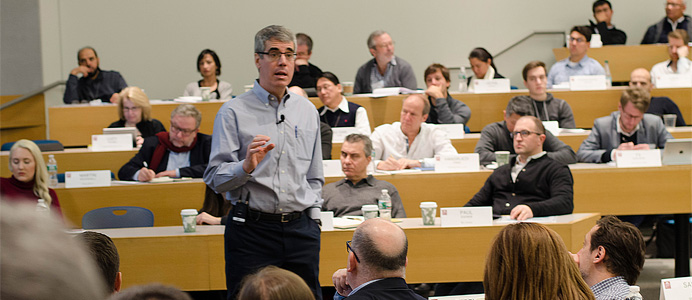
”We knew that EDP was having a very positive impact on participants, but even with those expectations, this impact report was remarkable in a positive way,” says EDP Faculty Director Bill Aulet. “It captures in a quantitative way not just the extraordinary venture creation capability that comes out of the course but also the other dimensions of how it creates entrepreneurial leaders. We know entrepreneurship can be taught, and this is another irrefutable set of points to validate this.”
Entrepreneurship is more than starting companies
Perhaps the most eye-catching statistic is this: 83% of surveyed participants founded a new venture during or after EDP. And yet, the report makes clear that entrepreneurship isn’t defined solely by launching startups. Participants have gone on to commercialize university research, build innovation ecosystems, create new products inside established organizations, lead venture initiatives, and transform industries in countries around the world.
The report paints a broader picture of entrepreneurship, one rooted in solving meaningful problems, creating value, and building organizations that endure.
Why the results matter
While many executive education programs measure satisfaction immediately after participants return, it is a rare opportunity to have longitudinal results to explore.
Among the report’s findings:
- 64% of alumni earned significant career promotions following EDP.
- Alumni ventures have already produced 14 successful exits through acquisitions, mergers, or IPOs.
- Participants represent 27 countries and nearly three decades of program cohorts, demonstrating that EDP’s influence extends well beyond a single region or industry.
Those numbers suggest a lasting behavioral change that past participants can attest to.
For longtime entrepreneur and investor Hugues Boltot, the difference wasn’t simply learning entrepreneurial frameworks, it was learning from people who had actually built companies.
“You can learn it. You can read it. But when you hear it from people who have actually done it, it’s completely different.”
Boltot says the concentration of founders, investors, faculty, and experienced entrepreneurs created an environment unlike anything he’d experienced elsewhere.
“The density of successful entrepreneurs, founders, and experts in one place is really impactful.”
That observation helps explain why the program continues to produce measurable outcomes across so many industries and countries. Participants become part of an international network of entrepreneurs, executives, investors, researchers, and innovators who continue sharing ideas and supporting one another long after the week at MIT ends. As those relationships compound over time, so does the program’s impact.
Better, not bigger
One of the most interesting themes throughout the report is that impact often begins with better decisions, not necessarily bigger ones.
Colin Dawson arrived at MIT with a growing AI company and no shortage of ideas. What he left with was clarity.
“EDP made me really rethink our sales and go-to-market strategy.” After returning home, Dawson narrowed his focus, reduced service offerings, and reshaped his business around a clearer long-term vision. “We cut a load of service lines. We lost revenue because of it, but it wasn’t really what we wanted to be.”
His story illustrates something the statistics alone cannot: the most valuable outcome isn’t always founding a company; it’s building a better one.
Join the next cohort
The Entrepreneurship Development Program (EDP) is designed to help entrepreneurs, innovators, and intrapreneurs move beyond ideas and into disciplined execution. The new Impact Report suggests that, for many participants, those six days become the beginning of something much larger. If you are interested in joining this global network of innovators, we invite you to learn more about and apply for the upcoming January offering of EDP.