




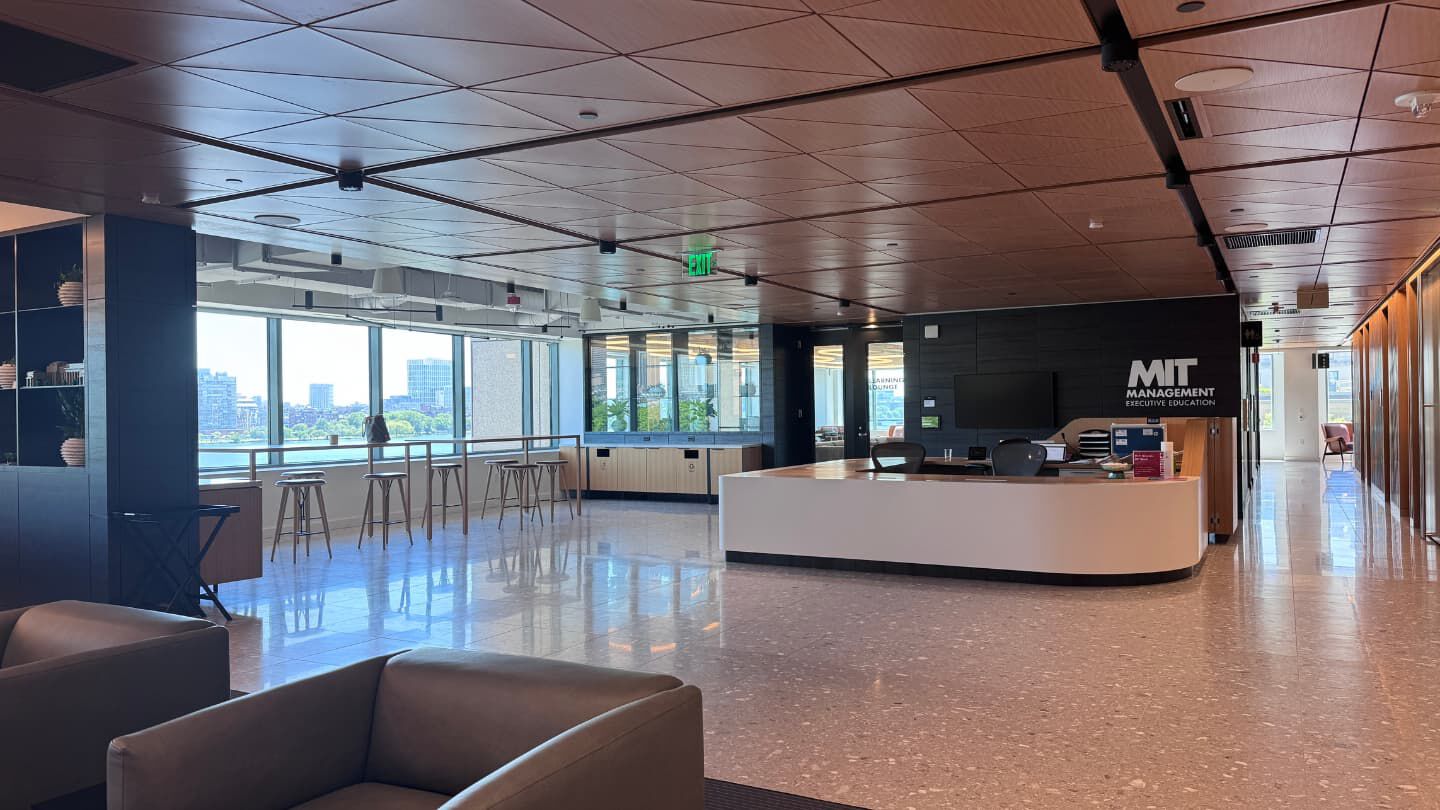
A New Chapter for Executive Education: Searching for the Right Space
Over the years, MIT Sloan Executive Education has delivered world-class programs across an evolving mix of spaces - ranging from hotels and conference centers, to their dedicated Executive Education Suite inside the primary Sloan School of Management building. But as recent demand for in-person learning accelerated, it became clear that capacity alone was no longer the sole challenge. New learning spaces would require a purpose-built environment - one designed to seamlessly integrate learning, collaboration, and the full participant experience.
The idea of expanding MIT Sloan Executive Education’s footprint is not a new one. Prior to COVID-19, a small project team with key players from Sloan and central MIT campus had already begun exploring options to grow its physical footprint. By 2021, that exploration became more focused with an active search in Kendall Square, widely recognized as the most innovative square mile on the planet. While several locations showed promise, none of them fully aligned with the team’s vision for a future-forward Executive Education experience.
The breakthrough came in late 2022. A neighboring building - steps from the existing Executive Education suite - presented a rare and compelling opportunity. From the first tour, the team saw more than just proximity. It was a space where they could have the opportunity to design a next-generation learning environment. After a lengthy negotiation process, the lease was officially signed in March 2024.
Collective Design Process
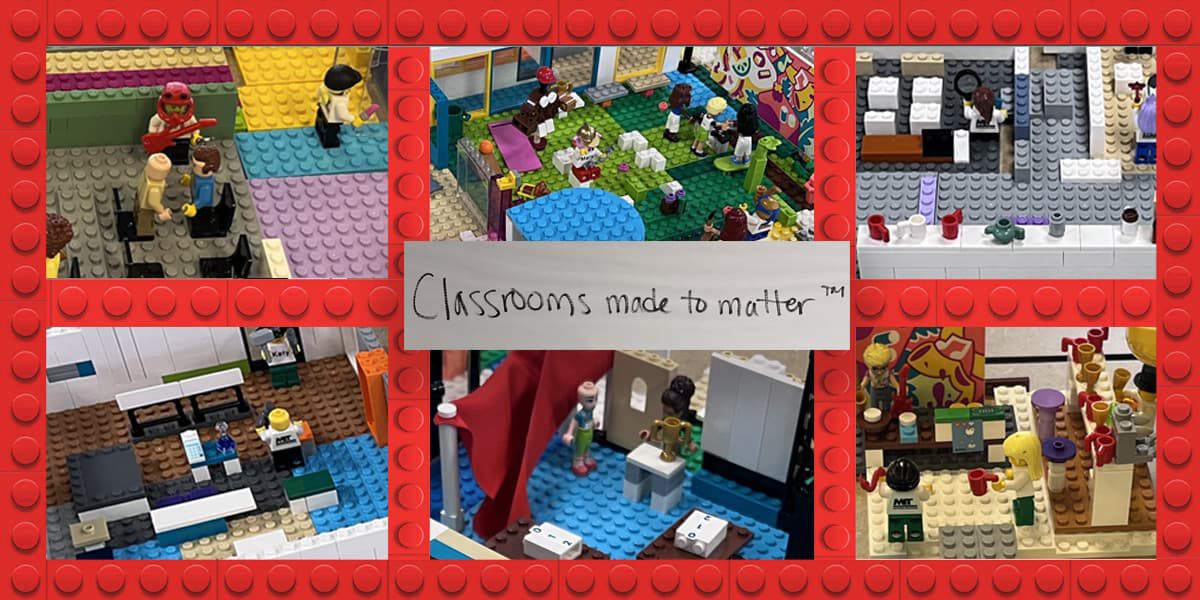
With the location secured, the team’s focus shifted to an equally important challenge: how were they going to bring the space to life through thoughtful, intentional design? To help launch the department into early-stage ideation, they partnered with Dave Robertson, an MIT faculty member known for his work on innovation, product development, and design thinking - including his leadership in LEGO’s innovation transformation and authorship of several books on the subject. Dave facilitated a fun and engaging interactive workshop where Executive Education staff used LEGO bricks to envision “The Executive Education Center of the Future.” The resulting models got the entire department to spark early ideas and fresh perspectives towards shaping a space designed for connection, creativity, and learning.
“We really wanted to do everything we could to make sure that the people who were going to end up using the facility had a strong voice in the process.” Said Peter Hirst, Senior Associate Dean of Executive Education
Building on the momentum of that early exercise, the effort took on new structure in June 2024 when Gensler was brought on as the project’s design partner. With their guidance, the team transitioned into a more formal and inclusive design process, engaging a broad range of stakeholders through focus groups, interactive workshops, and one-on-one conversations. Importantly, they also brought their preferred catering partner, Restaurant Associates, into these early discussions to help shape both the culinary experience and the design of the kitchen from the outset. Together, these sessions helped translate initial ideas into clearer priorities, ensuring the space would be shaped by the needs and perspectives of those who use it the most.
As Amy Davagian, Associate Director, Facilities Projects & Operations, noted, “no decision along the way was made in a vacuum.” Each choice required balancing competing priorities, considering trade-offs, and ensuring that improvements in one area did not create challenges in another.
Technology Designed Around Human Interactions
Technology became a powerful enabler in shaping the experience of the new space - but only when it served a clear purpose. The goal was never to showcase technology for its own sake, but to use it in ways that would elevate how participants learn, interact, and engage.
In fact, one of the most transformative features is something most participants will never even realize is there. Each classroom is equipped with a Meyer Sound Constellation System, allowing conversations to happen effortlessly throughout the room without the need for traditional amplification via lapels and table microphones. Through a network of nearly 100 ceiling-mounted microphones and speakers, the system dynamically adjusts acoustics in real time, delivering consistent audio clarity across the room. This creates a setting where participants can engage more easily, and faculty can facilitate discussions without technological barriers.
The technology was first introduced to the team by Jason Alvarez, Director for Teaching and Learning Technology in Sloan Technology Services, who had seen it demonstrated at another university and recognized its potential to transform the classroom dynamic.
But not every advancement in the classroom came from new technology. In fact, one of the most consistent priorities voiced by stakeholders was the need for ample, traditional whiteboard space to support dynamic teaching and real-time problem solving. At the same time, preserving the abundant natural light in each classroom was equally important - limiting the opportunity for permanent wall-mounted boards. The solution came in the form of “moving walls”, next-generation rolling whiteboards suggested by visual practitioner Kelvy Bird that provide flexibility without sacrificing openness. These mobile surfaces allow faculty to adapt the room in real time while maintaining bright, welcoming learning environments.
As Davagian noted, "We pushed the technology forward where it made sense. While innovations like the Meyer Sound System helped to create a more effective classroom environment, some of the most valuable learning moments still happen through conversation, collaboration and ideas sketched out with a marker on a whiteboard.”
Healthy Spaces: Sustainability and Well-Being
Sustainability served as a guiding principle from the earliest stages of design, shaping decisions at every level of the project. Across the space, environmentally responsible materials - recycled content, natural fibers, and low-impact finishes - were carefully selected not only for their durability and environmental benefit, but for how they contribute to a space that feels warm, comfortable, and intentional for participants. These choices reinforce a physical environment that supports focus and well-being, while aligning with MIT’s broader climate goals. In parallel, the project team is pursuing LEED Gold certification through the U.S. Green Building Council, reflecting a holistic approach to creating a high-performance learning environment.
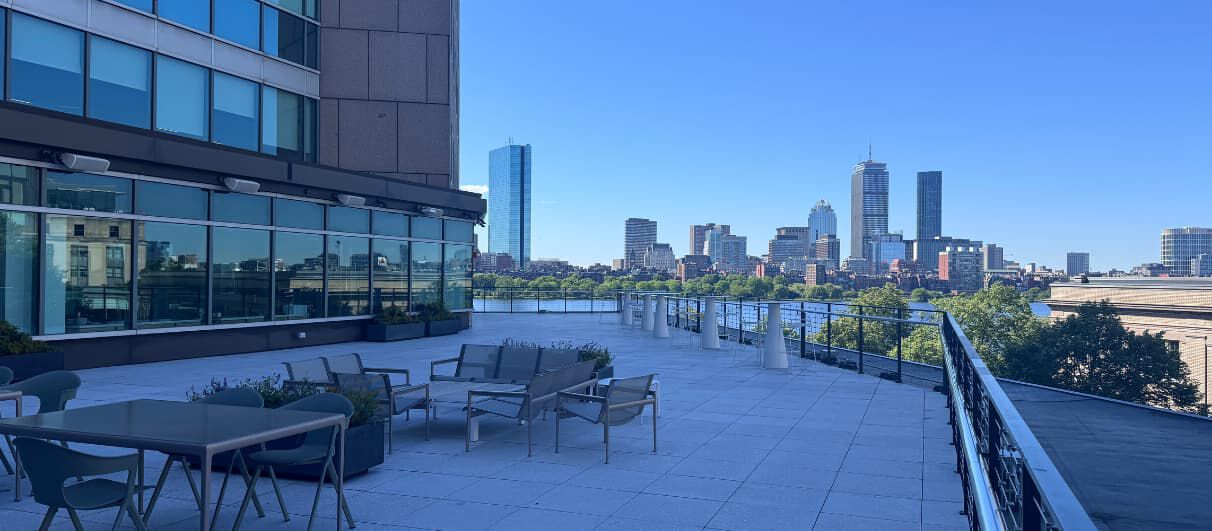
Equally central to the design was the well-being of the people who use the space. Access to natural light, greenery, and outdoor environments became key considerations in shaping the participant experience. Expansive windows bring daylight deep into classrooms and common areas, while integrated plantings introduce elements of biophilia that support focus, energy, and connection. One of the most distinctive outcomes of this thinking is the outdoor terrace - an idea that began informally during an early building tour and ultimately became a defining feature of the project. Today, it offers participants a place to step away, get fresh air, and recharge, with views of the Boston skyline reinforcing the sense of openness and possibility.
That same commitment to sustainability is experienced most directly by participants through a different kind of consumption: how food is prepared and shared. The all-electric kitchen supports lower-impact operations, while the culinary program emphasizes local sourcing of ingredients and seasonal menu design, most notably making significant efforts towards reducing the inclusion of red meat in alignment with MIT’s carbon reduction goals. For participants, this translates into meals that feel both intentional and energizing - supporting wellness, sustaining engagement throughout the day, and reinforcing a shared commitment to responsible practices.
The Spirit of the Space
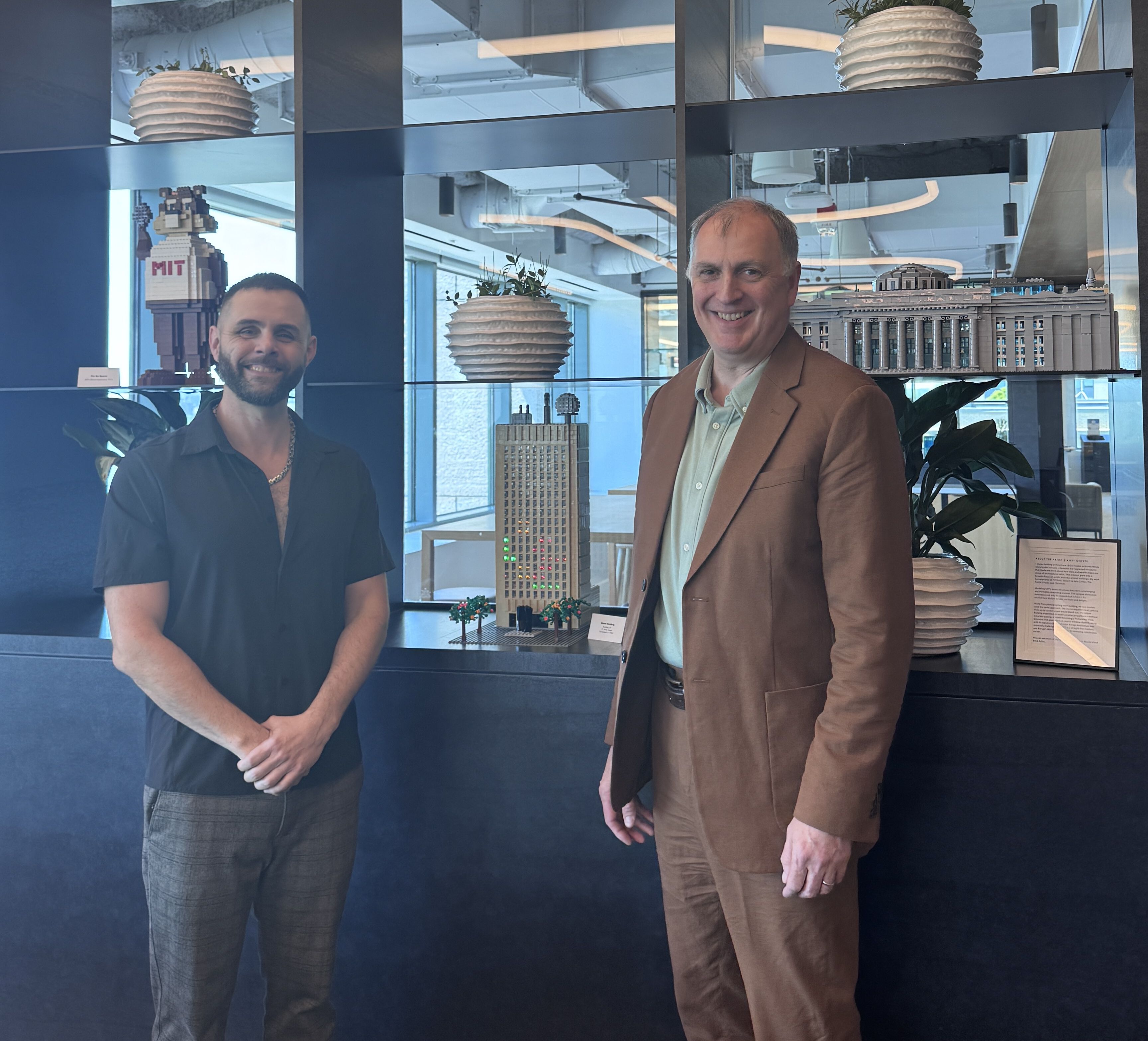
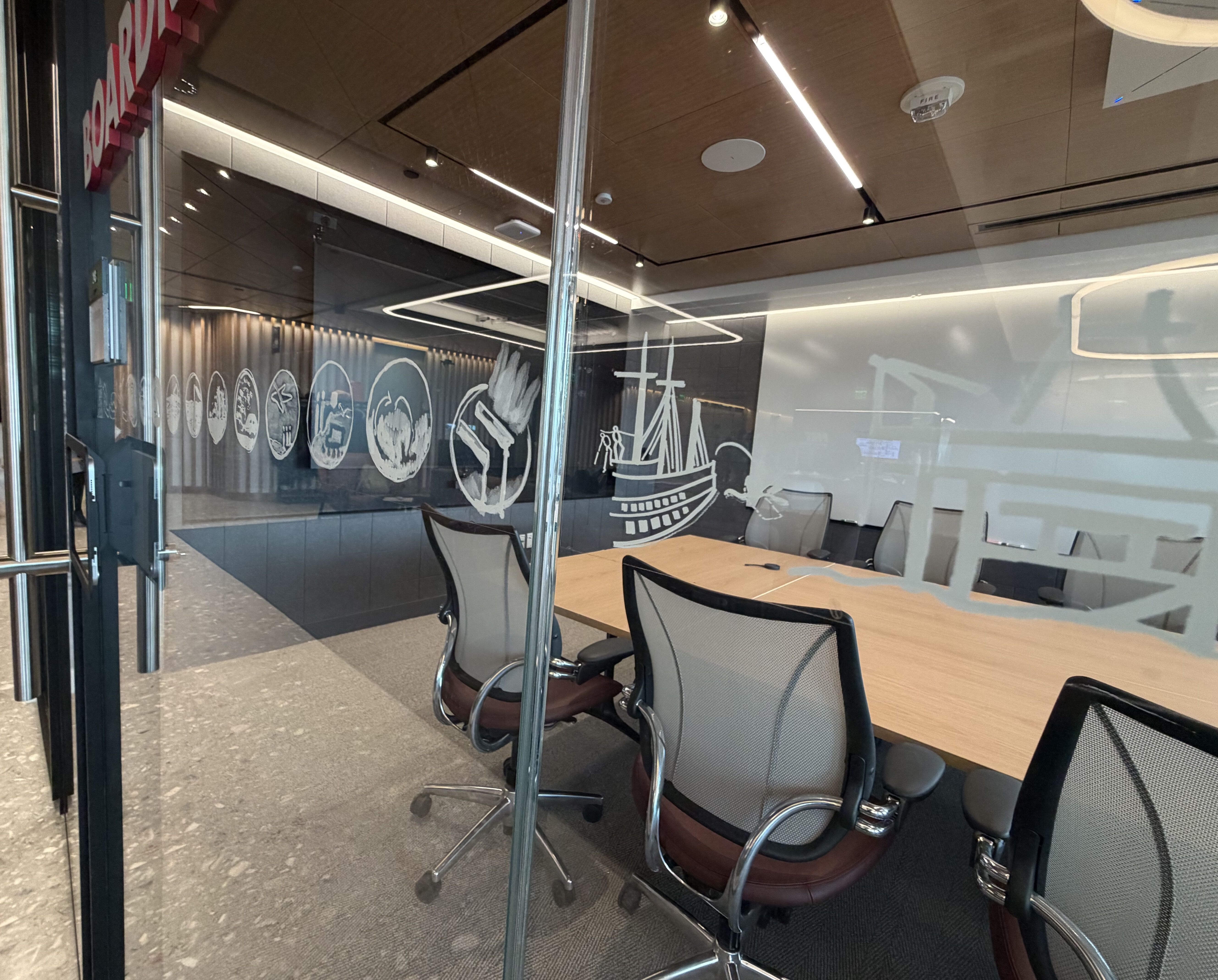
Beyond its classrooms and shared spaces, the spirit of the new Executive Education suite is often found in the details, elements that may not immediately stand out, but reveal themselves over time. Custom miniature LEGO models of iconic MIT buildings, created by Rhode Island Brick Artist Andy Grover, celebrate the Institute’s long-standing culture of creativity and experimentation. Participants will also find photographs from an existing MIT sculpture walk offering another subtle connection to campus and invite participants to explore beyond the classroom. Visual “hieroglyph” graphics, developed by visual practitioner Kelvy Bird, draw from the practice of visual scribing - a familiar tool in Executive Education programs used to capture ideas, surface patterns, and make complex concepts more memorable. Even the small dedicated staff room reflects this ethos, serving as the operational heartbeat where the behind-the-scenes coordination brings each program to life.
Taken together, these elements reflect the same principles that shaped the project from the start: thoughtful design, purposeful technology, sustainability, and a deep focus on the participant experience. Yet for Senior Associate Dean Peter Hirst, the true measure of success goes beyond any single feature. It’s about the feeling the space creates. As he describes it, “It was designed with the hope that people would feel energized and inspired when they walked in.”
Bird explains how she hoped that “participants would experience some delight from the images and wonder about the origin, or about any subtle messages. They’re not obvious! But for anyone wanting to add some playfulness into their executive education experience, perhaps these hieroglyphs could be a starting point.
The Executive Education team would like to express its deepest appreciation to the many colleagues and departments across Sloan and MIT, along with our valued external partners and vendors, whose collaboration and expertise were instrumental in bringing this project to life. This space stands as a testament to that collective effort, and we are grateful to all who contributed, including but not limited to:
- Sloan Space Planning & Facilities
- Sloan Office of Communications
- Sloan Technology Services
- MIT Campus Construction
- MIT Office of Sustainability
- Restaurant Associates
- Gensler
- Turner