







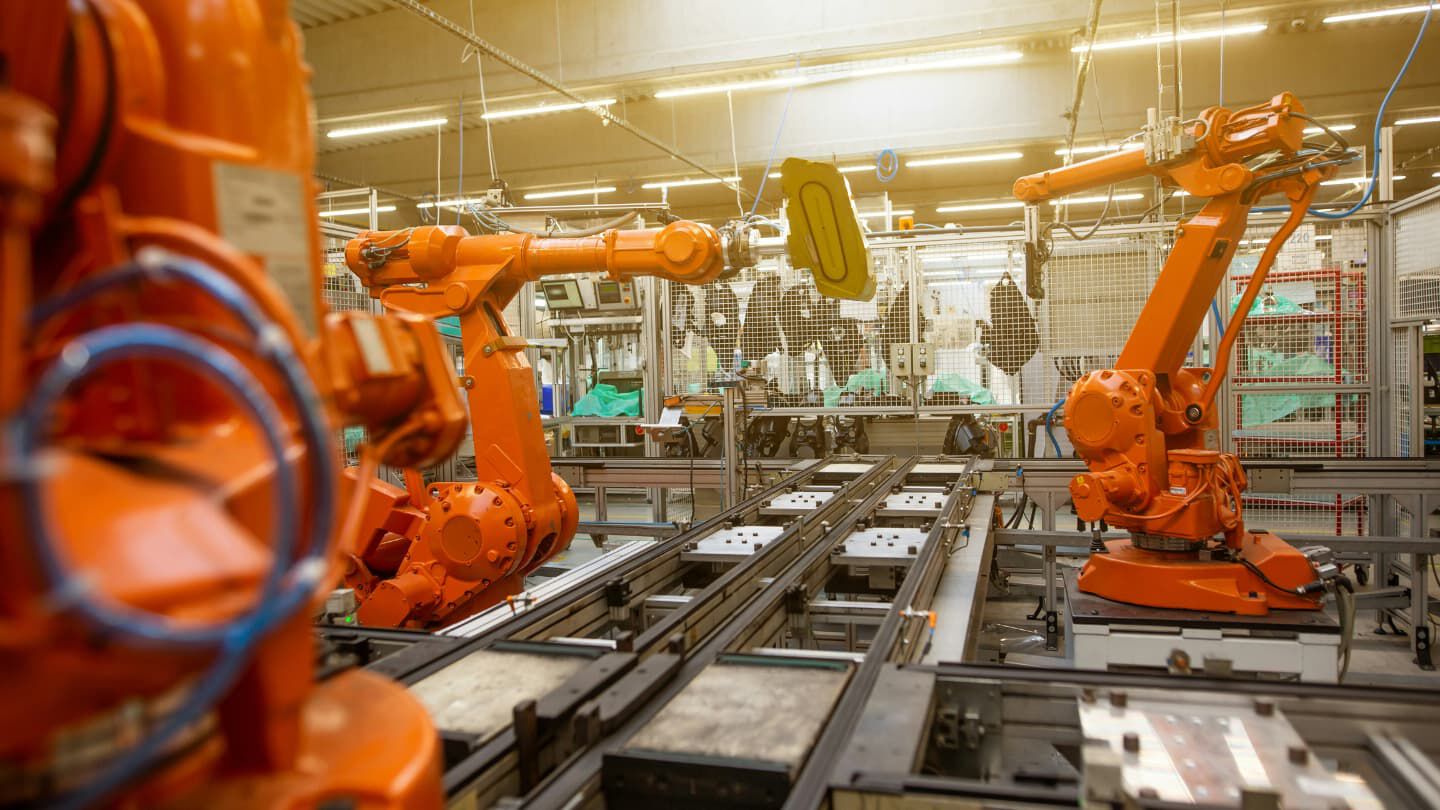
The range of industrial AI technologies available today in many sectors is impressive. Why don’t we hear as much about the successful adoption of “physical” AI (sensors, robots, smart factory) as we do of its digital, screen-bound counterparts like ChatGPT, Claude, and the like?
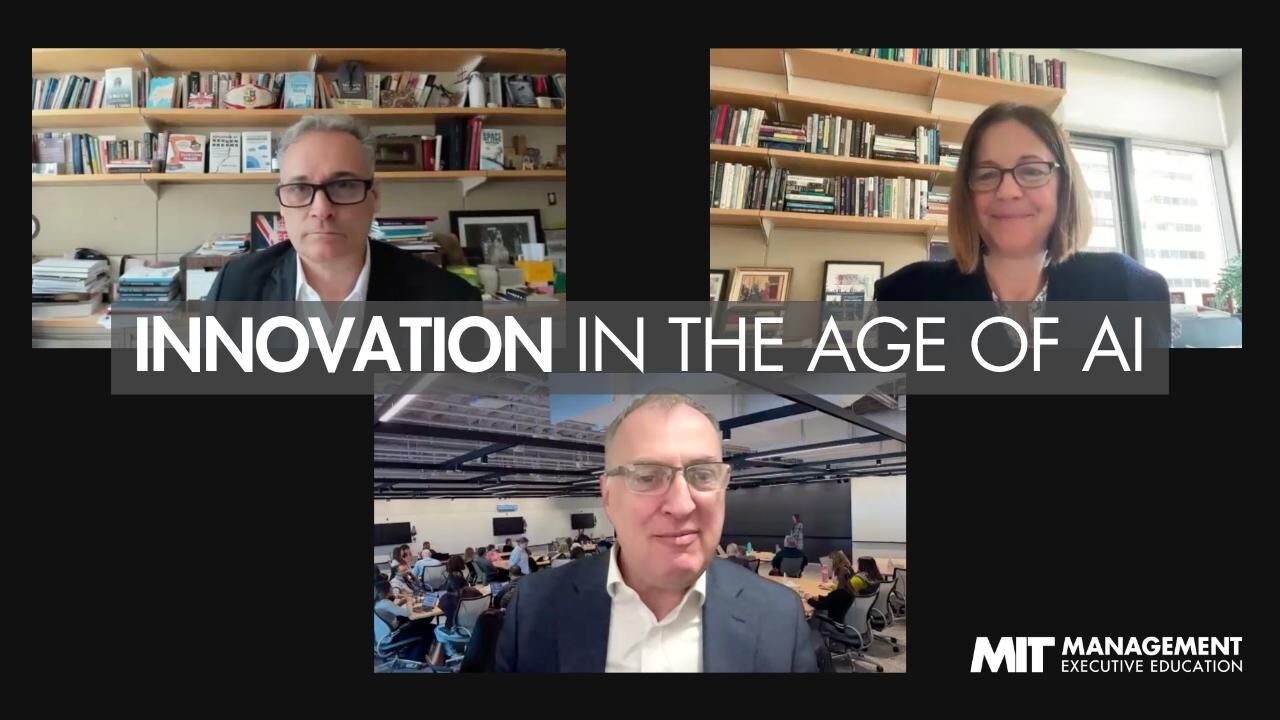
This was one of the central questions explored in a recent LinkedIn Live conversation led by John Carrier, Senior Lecturer in System Dynamics at MIT Sloan School of Management and my MIT Sloan Executive Education colleague Diane Abbott, Associate Director of Executive Programs. John pointed to examples such as a major pharmaceutical company using digital twins in pilot plant design and a large brewery dramatically reducing changeover time through agentic AI, among others. Yet, widespread adoption of industrial AI feels far. One of the key reasons, John explained, is organizational readiness.
This is also not the first time we have explored this challenge. In an earlier post, “Seeing Beyond the Dashboard: Insights on Industrial AI,” I reflected on how leadership, culture, and systems thinking shape whether industrial AI delivers on its promise. That same theme surfaced again here, perhaps even more urgently: the hard part is rarely access to the technology. It is knowing where it belongs, how it changes decision-making, and how to help the organization adapt to it.
Three insights from that conversation deserve particular attention.
1. Start with the system, not the technology.
One of the enduring temptations of any new technology wave is to begin with the tool rather than the problem. Industrial AI is no exception. As John emphasized, organizations are far more likely to realize value when they begin with a deep understanding of the system they are trying to improve.
Sounds straightforward, but in practice, it requires leaders to resist the allure of shiny capabilities and ask harder questions. Where does the system create friction? Where are the feedback loops too slow? Where is information incomplete, delayed, or poorly used? Where would better judgment, faster learning, or stronger visibility materially change performance?
John illustrated this with examples that span both history and the present. He contrasted two floor plans—a 1971 Corning plant schematic and an MIT Media Lab spinoff Tulip’s contemporary view of factory operations—to show that while the tools have changed dramatically, the leadership need has not. Organizations still need to know where information is strong, where it is missing, and how to synchronize activity across the system.
The same logic appears in the digital twin example he shared from a major pharmaceutical company. Using this approach in pilot plant design, the team reduced design cost by more than 50 percent, cut time to market by 50 percent, used only a third of the floor space, and achieved high-quality output on startup. The lesson is one that leaders should take seriously: When mistakes can be made and corrected in a digital environment, the economics of learning change dramatically. Before asking what AI can do, leaders should ask what the system needs.
2. The real opportunity is not just automation. It’s redesign.
A second insight from the conversation is that many organizations still think too narrowly about how AI creates value. They look for opportunities to automate existing steps or make current workflows incrementally more efficient. That can generate results, but the larger opportunity often lies in rethinking the work itself.
John’s example from Mexico’s largest brewery makes that point especially well. There, a relatively simple AI agent helped compress a six-hour changeover process into fifteen minutes by pulling the right data from machines and the cloud and getting it immediately to maintenance teams. The value did not come from layering technology onto an unchanged process. It came from redesigning the process around faster, better information flow.
This is a useful reminder for leaders across sectors. AI does not always create the greatest value when it accelerates existing work. Often, it creates the most value when it allows organizations to challenge assumptions about how that work should be done in the first place.
That kind of redesign also requires discipline. Not every problem needs the most advanced tool. As noted in the discussion, some use cases are best addressed with relatively simple agents rather than the most complex models available. The leadership task is not to pursue sophistication for its own sake. It is to match the right capability to the right problem and stay focused on the value to be created. In that sense, industrial AI rewards operational judgment as much as technical ambition.
3. Competitive advantage will come from learning quicker, not just investing faster.
Perhaps the most important takeaway from the conversation is that access to technology is becoming less of a differentiator. Organizations can obtain comparable tools, similar models, and equal computing power. What separates leaders from laggards is not simply adoption, but absorption. Can the organization take in new information, interpret it well, and act on it quickly?
John framed this through the OODA Loop concept: observe, orient, decide, act. His point was that industrial AI creates value when it helps organizations move through that cycle faster and with better judgment. That framing matters because it shifts the leadership question. Instead of asking where AI can be deployed, leaders can ask how AI might improve observation, strengthen orientation, support better decisions, and ultimately enable more effective action.
Just as importantly, John argued that many organizations invest too heavily in visible action while underinvesting in the earlier stages of the loop. Leaders are often drawn to technologies that do something dramatic and immediate. But in many cases, the greater opportunity lies upstream: better sensors, better data, and better models that help the organization see more clearly and interpret signals more accurately before deciding what to do next. As he put it, organizations may need to shift investment away from “act” and toward “observe” and “orient.”
Here again, the examples from the session are revealing. John pointed to synthetic data for syringe inspection as a way to train models even when real defects are exceptionally rare, and to a refinery case as a cautionary tale about overloaded information systems and poor signal flow. Together, those examples reinforce a broader leadership point: More data is not always better. The real advantage comes from collecting and interpreting the right data in ways that improve action.
Those questions lead directly to culture. Industrial AI will not deliver transformation simply because data is available. It will matter only if organizations are willing to listen, learn, and adapt. That is why the leadership challenge is ultimately broader than technology adoption. It is about creating an operating environment in which useful signals are recognized, experimentation is possible, and learning is translated into better practice.
Industrial AI may be raising the stakes, but the underlying leadership challenge is a familiar one. The organizations that benefit most will not necessarily be those with the boldest pilots or the largest technology budgets. They will be the ones that understand their systems deeply, redesign work thoughtfully, and build the capacity to learn faster than their competitors.
If you are looking to move from AI curiosity to operational impact, I encourage you to explore John Carrier’s MIT Sloan Executive Education course, Strategy, Survival, and Success in the Age of Industrial AI, and consider enrolling in either the live online or in-person offering.