



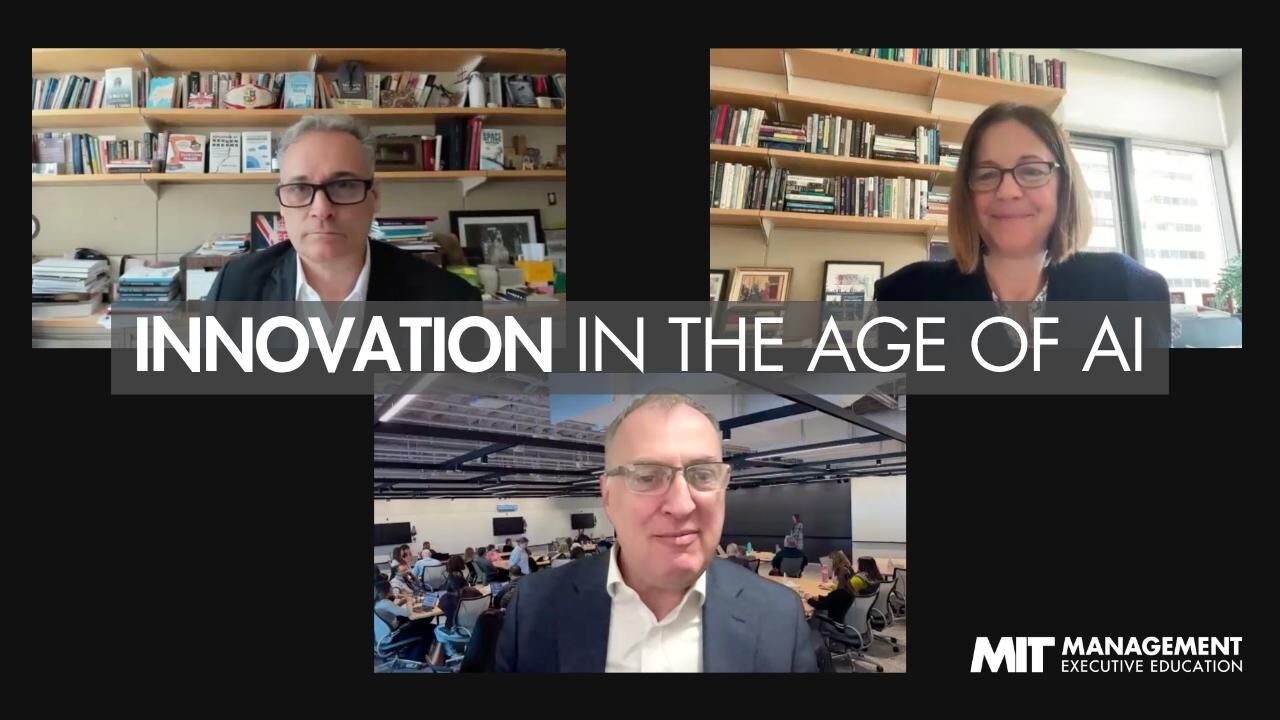


Succession in family enterprise has always been complex. But today, that complexity is compounded by faster-moving markets, shifting family dynamics, and a next generation that is redefining what leadership looks like. These themes were front and center in a recent LinkedIn Live conversation I had the pleasure of hosting with John Davis, a Senior Lecturer at MIT Sloan School of Management and the Faculty Director of the Family Enterprise Program.
For decades, John has worked closely with family-controlled enterprises around the world, advising families, boards, and leaders as they navigate governance, ownership, and succession across generations. Few people have spent as much time thinking about what actually works (and what quietly fails) when leadership transitions unfold inside family systems. Considering that “family-owned businesses account for more than 70 percent of global GDP and about 60 percent of global employment,” as reported by McKinsey, this vital sector of the economy often appears to be overlooked and underserved by financial analysts, the media, and management education providers.
From event to process
One of John’s most insightful observations was deceptively simple: Succession is no longer a single event. It’s an ongoing process that unfolds over years, sometimes decades. Historically, many families treated succession as a moment in time, a handover of authority, often late in a leader’s career. Today, that approach is increasingly out of alignment with reality.
Family enterprises now must operate in environments defined by volatility, transparency, and speed. In that context, succession becomes less about naming a successor and more about building sustained leadership capacity. It’s about preparing individuals, governance systems, and the enterprise itself for continual renewal. Families need to rethink long-held assumptions. We are no longer in the era of “passing the baton.” We are firmly in a new era that demands redesign.
The families that manage this well don’t ask, “Who will take over?” They ask, “How are we developing leaders, now and over time?”
The rise of the leadership portfolio
Another theme that resonated strongly was the idea that leadership in family enterprise is no longer a single role. Instead, it’s a portfolio of responsibilities distributed across individuals and structures.
John spoke about the growing separation of executive leadership, board leadership, and ownership leadership. This shift challenges the traditional model of the all-powerful family CEO, and it also creates opportunity. It allows next-generation family members to contribute meaningfully without forcing them into roles that may not fit their strengths or aspirations.
Several audience questions touched on this directly, particularly around next-gen engagement. One participant asked how families can keep younger members involved when they don’t see themselves running the business day-to-day. The answer, implicitly, is choice. When leadership pathways are broader and more flexible, more people can see a future for themselves in the enterprise.
Readiness above rules
Throughout the discussion, John returned repeatedly to the idea of readiness. Not age. Not entitlement. Not family position. Readiness. Many families still rely on rigid succession rules: age thresholds, branch rotation, or implicit assumptions about who should lead. While rules can create order, they can also mask risk if they replace honest assessment of capability and commitment.
Readiness requires something harder: ongoing dialogue, development, and feedback. It means asking difficult questions about experience, credibility, and trust—especially trust from non-family executives. These conversations can be uncomfortable, but avoiding them is far more costly.
The emotional dimension
Perhaps the most powerful part of the conversation was the acknowledgment of the emotional reality of succession. This is the dimension that rarely appears in formal plans, yet often determines their success or failure.
Succession brings identity challenges for senior leaders, impatience and uncertainty for next-generation members, and anxiety across the organization. John emphasized that families who navigate succession well don’t minimize these emotions—they make space for them.
One audience member asked how to manage situations where senior leaders intellectually accept the need to step back but emotionally struggle to let go. There is no technical fix for this. But naming the tension, rather than ignoring it, is a critical first step toward healthier transitions.
Governance as an enabler
Another key insight was the evolving role of governance. At its best, governance is not about control. It’s about enablement. Boards, family councils, and succession committees create structured forums where difficult conversations can happen productively.
Strong governance helps depersonalize decisions that might otherwise become emotionally charged. When succession is treated as a shared leadership responsibility, rather than a private family negotiation, it becomes easier to focus on what the enterprise needs to thrive.
A call to reflect and to prepare!
If there was one overarching message from the conversation, it’s this: succession in family enterprise is not broken, but it is changing. Families that cling to outdated models risk disengagement and misalignment. Those who embrace a more dynamic, developmental, and human-centered approach position themselves for longevity.
Succession isn’t about replacing leaders. It’s about renewing the enterprise. And in this new era, that renewal requires intention, capability, and learning.
For leaders, owners, and advisors who want to go deeper into these questions, I encourage you to explore Professor Davis’s upcoming MIT Sloan program on family enterprise, a rare opportunity to study succession, governance, and long-term value creation through rigorous frameworks and real-world cases.
And if you work in a family-owned firm, many of the programs on our roster will be relevant to you. Whether you are part of the family or not, the success of the enterprise is everyone’s responsibility!