






Entrepreneurship is often celebrated as a spark of insight, a eureka moment that changes everything. But the real work of entrepreneurship—the work that transforms ideas into impact—demands discipline, humility, and a willingness to keep learning long after the initial excitement fades.
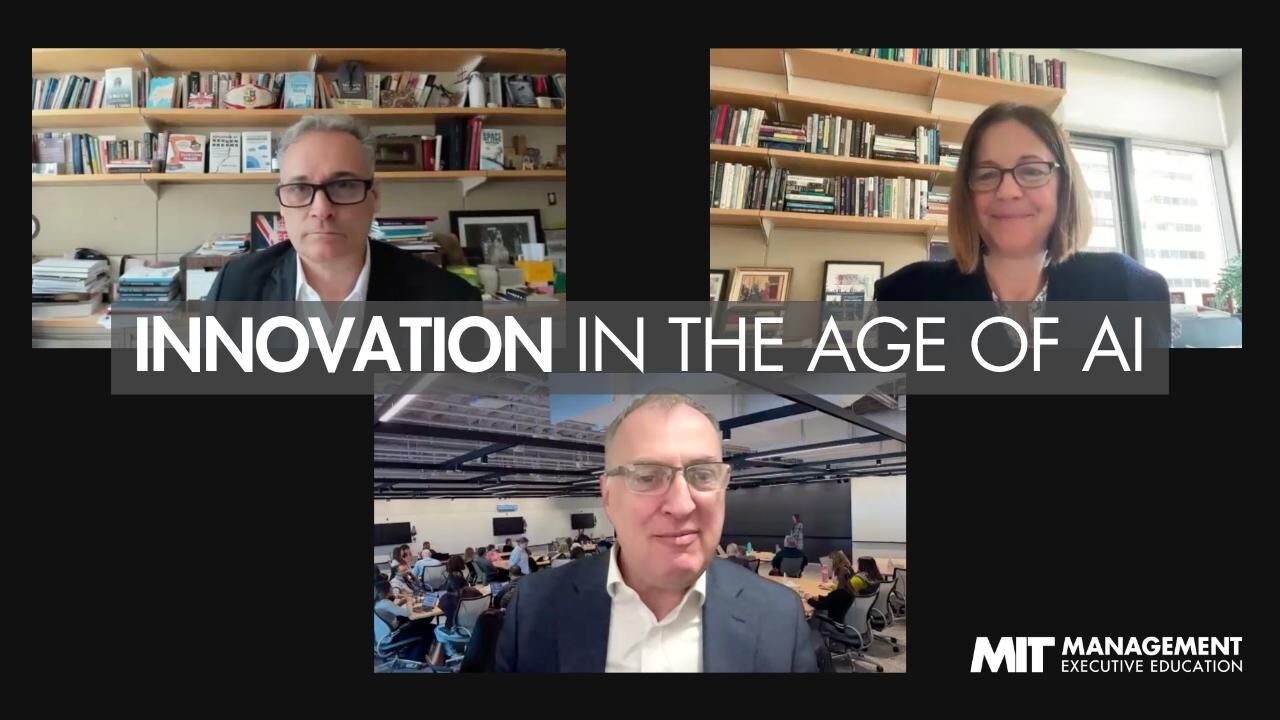
During a recent LinkedIn Live conversation with Bill Aulet, Managing Director of the Martin Trust Center for MIT Entrepreneurship, and Remington Hotchkis and Mike Wandler, two remarkable former participants of the Entrepreneurship Development Program (EDP), I was reminded that entrepreneurship is far more than a way of doing business. It is a way of thinking about the world and our role in shaping it. And, at MIT, it is very much a culture. While our discussion centered on EDP, the themes that emerged reached well beyond the bounds of any one program. They spoke to the deeper question we grapple with every day: What does it take to empower people to turn ideas into real, lasting impact?
Mindset over method
One of the points Bill Aulet has emphasized throughout his career is that entrepreneurship is a learnable and therefore teachable skill. It isn’t a mystical talent, but learning it requires a specific kind of mindset—an openness to experimentation, a comfort with ambiguity, and an appetite for disciplined iteration. This mindset has powered many MIT-spawned companies and innovations.
In our session, Bill spoke passionately about the “disciplined” part of entrepreneurship: entrepreneurs must be curious and creative, but also rigorous about testing assumptions, managing risk, and understanding customers far better than they understand themselves. That blend of creativity and discipline is something we try to instill in every EDP participant.
The power of different perspectives
Hearing Remington and Mike share their journeys reinforced the importance of variety in entrepreneurial settings. Remington came to EDP looking to sharpen the way he evaluated and incubated ideas. Mike entered as a seasoned operator seeking to broaden the innovation capacity of his organization. Both left with new tools, but more importantly, with a deeper sense of possibility.
Their stories highlight something essential: entrepreneurship isn’t just for startups. It is for leaders within corporations, for educators, for policymakers, and for anyone with a responsibility to build the future rather than simply react to it. This is important in entrepreneurship in general, and something that we emphasize in EDP: when people from different regions, sectors, and cultures come together, innovation accelerates. Each person adds a new lens through which others can see their own challenges in a different light.
Institutions matter more than ever
People often romanticize entrepreneurship as something that flourishes in garages, dorm rooms, and late-night brainstorming sessions. And certainly, those stories exist. But innovation at scale benefits from institutions—universities, corporations, governments, and foundations—that are willing to nurture talent, broker connections, and provide access to knowledge and networks.
One of the most striking features of MIT’s entrepreneurship ecosystem is the way these institutional roles interlock. The Martin Trust Center, the Technology Licensing Office, our executive education programs, hundreds of research labs, as well as companies and investors all contribute to a system that supports entrepreneurs throughout their journey.
A learning journey, not a linear path
Entrepreneurship requires humility, a certain ability to let go of cherished assumptions, to listen deeply, to pivot when necessary, and to embrace learning as an ongoing process. That is why programs like EDP are structured not as lectures but as hands-on experiences. Whether participants leave the program ready to launch a new venture or to innovate within an existing organization, they carry with them a renewed sense of agency. They see themselves not just as employees or managers, but as builders of something greater.
And that surely is the heart of entrepreneurship: the belief that we can create something better, and the discipline to bring it into being.
Entrepreneurs are fast-moving. They make assertive decisions and are always keen to learn. Even though the program starts January 18th, 2026, that’s plenty of time for folks who thrive on the go! There are a few seats available if you move fast and register today.