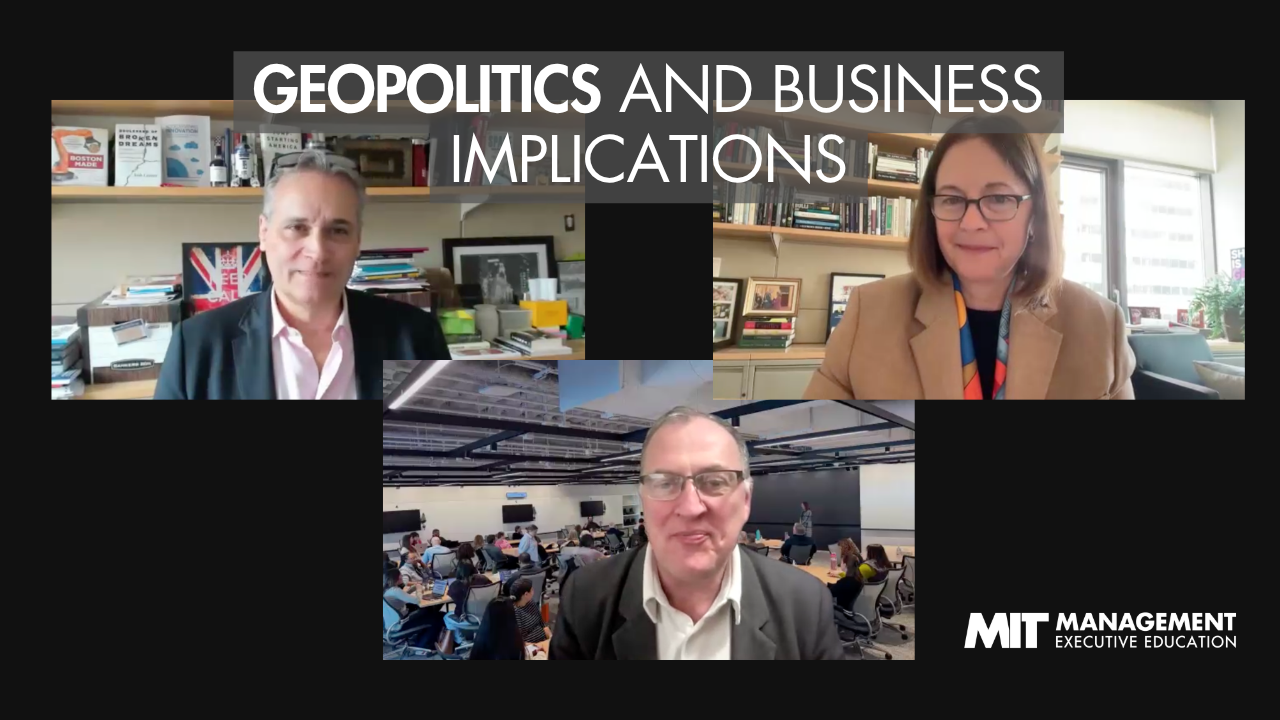









We have entered an era in which geopolitics is no longer a distant backdrop to business strategy. It is a powerful force shaping markets, supply chains, capital flows, technological innovation, and competitive advantage. For business leaders—on the board and in executive leadership roles—understanding the broader geopolitical environment is no longer optional. It is essential to strategic planning, investment decision-making, and long-term growth.
Business strategy shaped without a geopolitical dimension is now incomplete.
This new course is built on a simple but urgent premise: organizations that fail to monitor and manage geopolitical risk will fall behind. Successful organizations need the ability to interpret, anticipate, and respond to geopolitical change as a core strategic capability.
Over two immersive days on MIT’s campus, you will acquire practical frameworks and tools for navigating a rapidly evolving global landscape shaped by shifting power and policy dynamics, economic realignment, and technological competition. The course focuses on the business implications of geopolitics, which increasingly shape where and how companies operate, compete, and grow. These dynamics influence market access, supply chain design, cost structures, technology and data decisions, access to resources, and capital allocation. It equips executives to make informed decisions across these critical levers—helping to strengthen organizational resilience, enhance competitiveness, and identify both emerging risks and new market opportunities.
Through a combination of strategic frameworks, economic and financial perspectives, policy dialogue, and hands-on simulations, you will learn how to move beyond awareness to action. The central question throughout the program is how to translate geopolitical insight into stronger business strategy and sustainable competitive advantage.
You will leave this course with an organization-specific approach to navigating geopolitical volatility that integrates risk management, opportunity identification, and strategic execution.






.png)